

Top Shower Design Trends for Lancaster & York Homes in 2025
Meta Description: Discover the top shower design trends for Lancaster & York homes in 2025. From curbless entries and frameless glass to solid surface panels and smart controls, see how Central PA homeowners are upgrading comfort, style, and durability.
Slug: shower-design-trends-lancaster-york-2025
Focus Keyphrase: shower design trends Lancaster York 2025
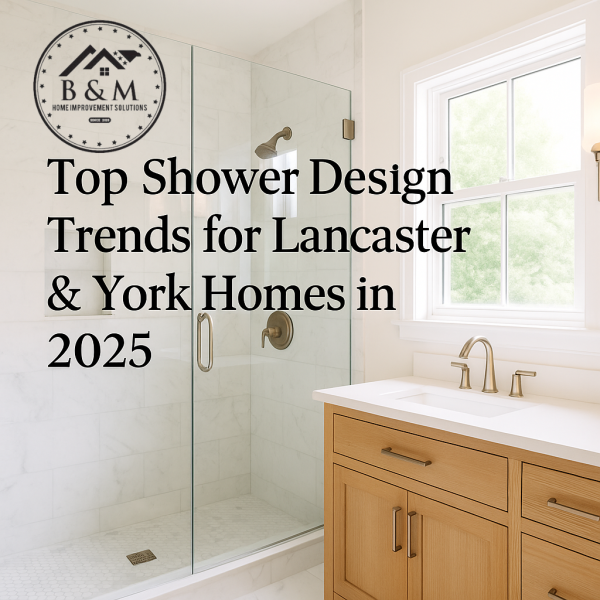
Header Image Alt Text: Light and bright walk-in shower with frameless glass and brushed gold fixtures in a Lancaster PA home
Introduction
Shower remodeling in 2025 is about more than a fresh look. In Lancaster and York, PA, homeowners want a space that is easier to clean, safer to use, and designed to last—without giving up warmth or style. The best projects marry practical details (waterproofing, ventilation, maintenance) with the design choices people notice every day (tile layout, glass, fixtures, and lighting). The result is a space that feels like a retreat and performs like a workhorse.
This year’s leading trends reflect that balance. We’re seeing curbless walk-ins for accessibility and visual flow, solid surface wall systems that cut maintenance to near zero, frameless glass that expands smaller rooms, and smart fixtures that bring precision and efficiency. Just as important, homeowners are choosing lighter finishes and natural textures that make bathrooms feel bright, open, and calm.
Whether your goal is a fast 2–3 day shower replacement or a custom high-end tile build, use this guide to understand the design directions shaping Central Pennsylvania homes—and how to adapt them to your bathroom’s size, layout, and budget.
1) Curbless & Walk-In Showers: Seamless, Safer, and Spacious
The headline trend for 2025 is the curbless (also called zero-threshold) walk-in. Removing the raised lip at the shower entry creates a continuous floor line so the entire room feels larger and calmer. It’s a design upgrade and a safety feature—no step-over means easier access for everyone, including aging homeowners, kids, or anyone with limited mobility.
Design considerations for a successful curbless build:
Subfloor planning and slope. A proper preslope toward the drain is essential so water leaves the shower floor quickly. For remodels in older Lancaster and York homes—many with uneven framing or patchwork subfloors—plan for precise carpentry to recess or re-build the shower floor.
Drain strategy. Curbless showers pair well with linear drains along the back wall or opening, which allow larger tile or continuous solid surface panels and make the floor look more like a modern wet room.
Continuity of materials. Running the same tile or panel finish from the main bath floor into the shower creates an uninterrupted visual field and is one reason curbless designs read as high-end.
Water containment. Consider fixed glass panels, pivot doors with tight reveals, or a small “wing” panel near the opening to keep spray inside without rebuilding the curb you removed.
Curbless is fully achievable in most homes with the right planning. For a deeper dive into design and budgeting, see Curbless Shower Costs & Design in Lancaster, PA (2025).
2) Solid Surface Wall Systems: The Low-Maintenance Star
If you’re tired of scrubbing grout, solid surface shower panels will be one of your favorite 2025 trends. These engineered surfaces mimic stone and marble, come in modern textures and colors, and are non-porous—which makes them resistant to staining and mildew. Installed correctly, seams are minimal and edges are clean.
Why homeowners in Central PA are choosing solid surface:
Fast timelines. Many projects complete in 2–3 days, which reduces family disruption.
Easy care. No grout lines means quick cleanup with mild cleaners and soft cloths.
Durable beauty. The material resists scratches and won’t absorb water, helping it look new longer.
Design flexibility. From crisp whites to warm veined stones, the colorways fit both transitional and contemporary homes.
Solid surface systems pair well with frameless glass and modern fixtures. They are ideal for hall baths, busy family homes, and any client who values time and cleanability over the intricate detailing of hand-set tile.
Learn more here: Solid Surface Showers in Lancaster.
3) Large-Format & Slab-Look Tile: Fewer Lines, More Calm
For homeowners who love tile’s texture and craft, large-format tile is the 2025 upgrade. Sizes like 24″×48″—or even larger porcelain panels—create a slab-like look with very few grout joints. The visual effect is luxurious, the lines are quieter, and cleaning is easier.
Keys to success with large tile:
Flat substrate. The wall must be plumb, level, and flat to avoid lippage (uneven tile edges).
High-quality setting materials. Use premium thinsets and leveling systems designed for big formats.
Grout selection. Narrow joints (often 1/16″–1/8″) and high-performance grouts improve appearance and maintenance.
Waterproofing first. Your tile is decorative; waterproofing is the barrier. Modern membranes are the foundation of a long-lasting tile shower.
For the most reliable method, see our installation overview: Leak-Proof Tile Shower: Schluter Installation.
4) Frameless Glass: Simpler Lines, Bigger Feel
Frameless glass remains a top trend because it visually expands bathrooms and showcases the wall material—whether stone-look panels or large-format tile. Two features homeowners increasingly request:
Low-iron glass for a clearer view of light finishes (standard glass can appear green next to whites).
Protective coatings that help water bead and reduce spotting, particularly helpful in areas with mineral-heavy water.
Door style matters too. Pivot doors feel architectural and require less hardware, while sliders maximize clearance in tight rooms. Plan your opening, swing, and towel bar locations together so function matches the elegance of the glass.
5) Statement Fixtures: Brushed Gold, Matte Black & Polished Nickel
Hardware finishes now anchor the design story. In Lancaster and York, three finishes lead the pack:
Brushed Gold: Warm and refined, pairs beautifully with white surfaces and light oak vanities.
Matte Black: Minimalist and dramatic, ideal with soft grays or warm stone looks.
Polished Nickel: A classic upgrade that feels brighter and more upscale than chrome.
Beyond finish, function matters. Look for:
Thermostatic valves for precise temperature control and comfort.
Handshowers on slide bars for flexibility (rinsing, cleaning, multi-user comfort).
Ceiling-mounted rain heads as an optional luxury—not a replacement for a well-positioned wall shower.
Choose accessories (hooks, bars, drain cover, door handles) in the same or intentionally mixed finishes for a coherent palette.
6) Built-In Storage: Niches, Benches, and Ledges
Clutter is the enemy of a calm bathroom. 2025 projects solve it with integrated storage that disappears into the design:
Recessed wall niches sized to your bottles, located away from the main splash zone.
Shaving steps or floating ledges that keep essentials within easy reach.
Full benches that add comfort and also signal an upscale, spa-like intent.
Two professional notes: install solid blocking behind bench and grab-bar locations during framing, and slope niche bottoms slightly toward the shower to shed water.
7) Lighting & Ventilation: The Overlooked Essentials
Nothing elevates a shower like the right light—and nothing protects it like ventilation. Layer lighting so mirrors, general illumination, and the shower zone each receive attention:
Recessed damp-rated fixtures in the shower ceiling for task lighting and safety.
Back-lit mirrors or sconces at face height for daily routines.
Subtle LED accent strips inside niches or under floating benches to reinforce the architecture.
For ventilation, choose a quiet, properly sized exhaust fan and run it long enough to remove lingering humidity (a timer or humidity sensor helps). Good airflow discourages condensation and protects finishes—especially grout and wood.
8) Smart & Sustainable Features
Smart controls are moving into the mainstream. Options range from digital valves that remember your preferred temperature to water-use monitors and leak sensors tucked near the valve or drain. These add daily convenience and a layer of protection for the home.
Sustainability shows up in:
Water-saving showerheads that maintain a satisfying spray pattern.
LED lighting with high color rendering so spaces feel crisp and true to tone.
Materials that last, such as solid surface panels or properly waterproofed tile, which reduce the need for premature replacement.
Over time, efficient choices conserve resources and protect your investment.
9) Light, Natural Palettes with Warm Accents
A “light and bright” envelope remains the most-requested look in Central PA. Whites, warm beiges, and soft grays keep rooms airy. To avoid sterility, add natural wood (vanities or shelving), warm-metal fixtures, or a textured mosaic as a single accent. The goal is calmness with character—simplicity that still feels custom.
For bold color lovers, consider keeping the shower neutral and introducing color through paint, towels, or art. Updating accents later is easier than replacing permanent finishes.
10) Layouts for Small Bathrooms: Making Every Inch Count
Lancaster and York have plenty of older homes with tight footprints. Smart layouts help you gain function without moving walls:
Rectangular walk-ins with a single glass panel instead of a full door can work in narrow rooms.
Neo-angle or corner showers open floor space for a larger vanity.
Pocket or barn-style glass sliders fix door swing conflicts.
Wall-hung vanities and toilets show more floor area and make cleaning easier.
Think of the room as one composition. Align tile joints with niche edges, center drains on the main sightlines, and keep grout colors low-contrast for visual calm.
11) Safety & Aging-in-Place: Invisible Until You Need It
A modern shower can be beautiful and ready for tomorrow. Even if you don’t install grab bars on day one, adding solid blocking during framing allows them to be installed later exactly where needed. Other subtle choices:
Low or no threshold (curbless entries).
Slip-resistant floor textures in tile or solid surface.
Seat or corner step for steady footing during shaving.
Thermostatic controls to prevent temperature swings.
Designing with future use in mind protects your investment and your comfort.
12) The Two Reliable Paths: Fast Solid Surface vs. Custom Tile
Most successful shower projects fit one of two profiles:
Path A: Fast, Low-Maintenance Solid Surface
Timeline: typically 2–3 days.
Look: clean, modern, stone-look panels with minimal seams.
Best for: busy households, hall baths, rentals, and anyone who wants reliable performance and easy cleaning.
Learn what’s included in a well-executed fast remodel here: What’s Included in a 2–3 Day Shower Replacement.
Path B: Custom Luxury Tile
Timeline: longer; requires specialized prep and waterproofing.
Look: curated materials, architectural details, and made-to-measure features.
Best for: primary suites, long-term homes, and clients who value craftsmanship and uniqueness.
Both paths succeed when the waterproofing, drainage, and ventilation are treated as non-negotiables.
13) Budgeting with Confidence: Where the Money Goes
Clear expectations prevent scope creep. These are the primary cost drivers you’ll weigh during design:
Subfloor and framing corrections. Older homes often need leveling and reinforcement before the pretty work begins.
Waterproofing system and substrate. The brand, method, and labor for proper waterproofing are worth every penny.
Wall material. Solid surface panels reduce labor hours; custom tile increases time and detail.
Glass. Frameless and low-iron options cost more but transform the room visually.
Fixtures and valves. Thermostatic controls, rain heads, and slide bars increase price but add daily comfort.
Lighting and electrical. Adding dedicated shower lighting, mirror back-lighting, or outlet upgrades is money well-spent.
Ventilation. Upgrading a noisy, underpowered fan prevents future problems.
A good contractor will walk you through trade-offs openly so the final plan matches your priorities.
14) Common Mistakes to Avoid (and What to Do Instead)
Treating tile as waterproofing.
Tile is a finish layer. Use a proven membrane system behind or beneath the tile and flood-test when appropriate. See our method in Leak-Proof Tile Shower: Schluter Installation.Undersizing ventilation.
A quiet fan you actually run will protect your room. Add a timer or humidity control so the fan runs long enough after showers.Overcomplicating patterns in small spaces.
Too many grout lines and competing textures make rooms feel smaller. Simplify the palette; let one material lead.Ignoring glass logistics.
Measure twice, confirm swing/clearances, and plan towel bar locations before glass is ordered to avoid costly rework.No blocking for accessories.
Install blocking now for future grab bars, benches, and heavy hardware—even if you don’t need them yet.
15) A Practical Selection Roadmap
Use this sequence to streamline decisions and keep the project moving:
Decide on your build path (fast solid surface vs. custom tile).
Choose layout (curbless or low threshold; opening size; glass type).
Select wall material (panel color/texture or tile type and scale).
Pick fixtures (finish family; valve type; handshower; head style).
Plan storage (niche size/location; bench or shaving step).
Specify lighting (shower can, vanity lighting, accent ideas).
Confirm ventilation (fan model, controls, and grille placement).
Finalize glass (frameless style, hardware, low-iron option).
Review accessories (drain style, grab-bar blocking, hardware).
Schedule (lead times, demo date, install timeline, inspections).
Moving in this order minimizes backtracking and prevents last-minute clashes between parts.
16) Trend Pairings That Work in Central PA Homes
If you want ideas that are both current and timeless, start with these proven combinations:
Curbless + large-format tile + brushed gold fixtures
Warm, quiet, and elegant—great for primary suites.Solid surface panels in a light stone look + frameless glass + matte black hardware
Clean, modern, and low-maintenance—perfect for busy family baths.Subtle patterned floor tile + solid surface walls + polished nickel
Classic meets contemporary without heavy maintenance.White or cream envelopes + natural wood vanity + low-iron glass
A Scandinavian-inspired palette that feels fresh year-round.
As always, balance one “feature” choice (bold veining, a statement niche, or a distinctive fixture finish) with simpler supporting elements.
Conclusion
Shower design in 2025 is defined by clarity and care: clear sightlines, minimal maintenance, and careful construction beneath the surfaces. Curbless entries, frameless glass, solid surface panels, and thoughtful lighting create rooms that look better, function better, and last longer. Whether you’re planning a quick, durable replacement or a custom tile showpiece, the best results come from partnering with a contractor who treats waterproofing, ventilation, and details as seriously as the design.
At B&M Home Improvement Solutions, we help Lancaster and York homeowners navigate these choices with confidence—from product selection and layout to scheduling and installation. Our process emphasizes durability, cleanliness, and a calm, elevated aesthetic that feels right at home in Central Pennsylvania.
Ready to plan your 2025 shower remodel? Schedule a design consultation and explore options tailored to your home:
Shower Replacement in Lancaster, PA.