

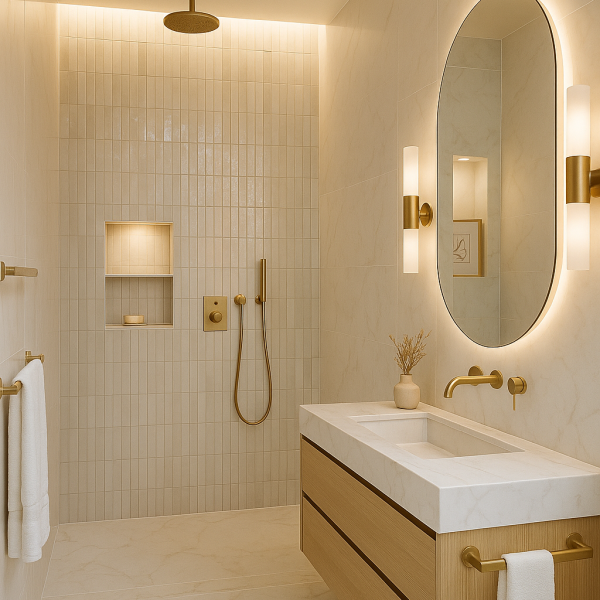
Curbless Shower Cost & Design in Lancaster, PA (2025): What to Know Before You Build
Thinking about a curbless (zero-entry) shower for safety, style, or aging-in-place? This guide explains true 2025 costs in Lancaster & York counties, the design and waterproofing details that actually matter, how curbless differs from “low threshold,” what permits/inspections typically mean locally, and how to keep your project on time.
Skimming? Start with these resources:
• Shower Guide (Lancaster): Shower Replacement – Lancaster, PA
• Speed Option: 2–3 Day Shower Replacement + 2025 Cost
• Waterproofing: Leak-Proof Tile Showers (Schluter)
• Accessibility: Curbless & Aging-in-Place and ADA Shower Remodels
• Permits: Do You Need a Permit?
• Talk to us: Contact B&M
At-a-glance: What a Curbless Shower Costs in Lancaster (2025)
Every bathroom is different, but based on current labor/material pricing and our local projects, here’s where shower-only curbless conversions typically land:
| Scope (shower-only) | What’s Included | Typical Local Range* |
|---|---|---|
| Curbless Retrofit, Solid-Surface System | Remove tub or old shower, new pan/tray with flush or near-flush entry, solid-surface wall panels, niche, standard valve/trim, standard glass (hinged/slider), new fan if needed; no layout move | $10k – $18k |
| Curbless Tile with Point Drain | Recessed (or reprofiling) subfloor, mortar bed, waterproofing (e.g., Schluter/Kerdi-type), mosaic floor tile, tile walls, bench/grab-bar blocking, standard glass; minor drywall/paint | $14k – $24k+ |
| Curbless Tile with Linear Drain (Premium) | Deeper recess/mud work for single-plane slope, linear drain kit, larger-format tile, custom glass, enhanced lighting/venting | $18k – $32k+ |
*Ranges reflect Lancaster/York pricing for shower-only conversions. Moving plumbing, specialty stone, steam, heated floors, or structural fixes push higher. Glass is typically measured after tile/pan sets and adds lead time. (Fabrication for frameless enclosures commonly runs ~5–10 business days to ~2 weeks in many markets.) (Quality Frameless Showers, framelessshowersystems.com)
Doing a full bathroom along with the curbless? See our Bathroom Cost Guide (Lancaster) and Timeline (week-by-week).
Why Curbless (Zero-Entry)?
Safer access now and as you age; no step to clear.
Cleaner look and easier daily cleaning (fewer grime traps).
Flexible layouts (benches, handhelds, wider entry, wheelchair/roll-in potential).
Resale appeal: aligns with universal-design features buyers increasingly expect. Middle-Atlantic data show universal-design bath projects cost more than midrange baths but can still return roughly ~50% at resale on average—most homeowners choose curbless for function and longevity rather than ROI alone. (Journal of Light Construction)
Planning accessibility? We’ll tailor to you. “ADA-compliant” is for public/commercial; for private homes we design ADA-informed solutions (clearances, controls, blocking, slopes) that fit your space and codes. See the ADA standards overview if you’re curious about technical criteria for roll-in vs transfer-type showers. (ADA Archive)
The Big Cost Drivers (and How to Control Them)
1) Subfloor & Slope Strategy
Curbless requires continuous slope to the drain without a step at the entry. For tiled pans, plumbing codes and industry standards target ¼″ per foot slope to drain; accessibility guidance suggests keeping walking/rolling surfaces at or below 1:48 (~2%) where access matters. We balance both for drainage and mobility. (Ceramic Tile Education Foundation, U.S. Access Board)
Ways to build it:
Recess the subfloor (most premium; cleanest zero-entry).
Use a tapered “ramp zone” inside the shower if recessing is limited.
Pre-sloped trays (solid-surface or foam systems) designed for curbless.
Budget tip: Keeping existing joist direction and drain location lowers labor. Linear drains usually cost more (materials & prep) but simplify the slope plane.
2) Drain Type (Point vs Linear)
Point drain (center/offset): pan slopes from all sides. Often lower cost; mosaic floors help follow contours.
Linear drain: single-plane slope toward a long drain. Sleek look, larger tile options, but higher cost and more precise framing.
3) Waterproofing System
Curbless success lives or dies here. We use continuous waterproofing (e.g., sheet membranes, integrated bonding flanges, or factory pans) tied into walls, benches, and niches, and flood-test before tile where applicable. (See our approach: Leak-Proof Tile Showers (Schluter) and Solid-Surface Shower Systems.) For general manufacturer guidance on curbless assemblies, see Schluter’s curbless overview. (Schluter)
4) Wall System: Tile vs. Solid-Surface
Tile = fully custom looks, niches/benches of any size; higher labor; ongoing grout care.
Solid-surface = fast, low-maintenance, seamless panels; great for 2–3 day conversions and aging-in-place.
Compare materials: Solid Surface vs. Acrylic and Pros & Cons.
5) Glass & Lead Times
Curbless usually uses frameless glass. After tile/pan, we field-measure, then fabricate. Local shops typically return in ~5–10 business days to ~2 weeks, longer for specialty glass/etching. Plan this into your schedule. (Quality Frameless Showers, framelessshowersystems.com, L&L Glass)
6) Accessibility Features
Blocking for future grab bars, bench or fold-down seat, handheld on slide bar, and thermostatic valve height/placement add small costs but huge daily comfort.
Design Details That Prevent Problems
Water paths: Head(s) and body sprays should not blast toward the opening. Angle towards walls/bench.
Entry management: With a true zero-entry, we often add a trench/linear drain at the opening or plan a slight “dry zone” as you step in. (Thresholds for roll-in showers can be flush; if a threshold exists, it must meet change-in-level rules to remain accessible.) (U.S. Access Board)
Flooring: Use small-format mosaic for grip and to follow slope; or solid-surface base with integrated texture for fast installs.
Ventilation: Many older Lancaster baths need fan upgrades (CFM & ducting) to prevent moisture issues long-term.
Lighting: Task lighting at the vanity, wet-rated light near the shower, dimmable ambient to help at night.
Permits & Inspections in Lancaster/York
If you’re moving plumbing/electrical, altering structure, or creating new mechanical venting, expect permits and inspections. Pennsylvania follows the Uniform Construction Code (UCC), which adopts 2018 ICC codes (with state amendments). We handle drawings, applications, and inspection scheduling so your project stays clean and compliant. (Pennsylvania Government, phrc.psu.edu, City of Pittsburgh)
Not every swap needs a full permit set, but many curbless builds do because of framing/drain changes. We’ll advise per municipality. For ADA technical references (mostly public/commercial), see the 2010 ADA Standards. (ADA Archive)
Timeline: How Long a Curbless Conversion Really Takes
2–3 Day Option (Solid-Surface, No Layout Move)
Day 1: Protection, demo, prep; pan/tray set; plumbing rough; wall panels start
Day 2: Panels complete; accessories/niche; valve/trim; cleanup
Day 3 (if needed): Glass measure; punch items
Tile Curbless (Most Common)
Week 1: Protection/demo; recess/reframe; drain set; mud bed/pre-slope; waterproofing; flood test
Week 2: Tile walls/floor; grout; set fixtures; glass measure
Week 3: Glass fabrication & install window; paint/touch-ups; final punch
Glass adds time after measurement; typical fabrication is ~5–10 business days to ~2 weeks depending on shop/workload.
For full-bath projects (vanity, floor, lighting, paint, etc.), review our week-by-week timeline.
Realistic Local Scenarios (Examples)
A) Tub-to-Curbless, Solid-Surface (Fast-Track)
Scope: Remove alcove tub, install curbless tray and solid-surface walls, niche, handheld, standard clear glass
Why homeowners choose it: Zero grout, quick turnaround, safer entry
Typical range: $10k–$18k (no layout move; glass in separate measure/fab window)
Learn more: 2–3 Day Shower Cost (2025)
B) Tile Curbless with Bench (Most Popular)
Scope: Recess subfloor, mortar bed, sheet-membrane waterproofing, mosaic floor tile, large-format wall tile, bench, grab-bar blocking, linear drain optional
Why: Custom look + long service life with proper waterproofing
Typical range: $14k–$24k+ (linear drain, premium tile, niche/glass details push higher)
See our method: Leak-Proof Tile Showers (Schluter)
C) Roll-In, Accessibility-Focused (Wider Clearances)
Scope: Larger clear area, controls within reach range, blocking for future grab bars, fold-down seat, handheld on slide bar, anti-scald/thermostatic valve
Notes: We use ADA-informed dimensions and slopes suited to your mobility needs; public/commercial have specific ADA 2010 scoping (roll-in/transfer types). (ADA Archive)
Typical range: $18k–$30k+ (depends on size/clearances, glass, drain type)
FAQs (Lancaster)
Will water get everywhere without a curb?
Not when the slope, drain placement, and spray direction are planned correctly. For tiled pans, we target ¼″ per foot slope to the drain; where wheelchair/roll-in access matters we keep walking/rolling surfaces at or below 1:48 (~2%) to balance drainage and accessibility. (Ceramic Tile Education Foundation, U.S. Access Board)
Is a linear drain worth it?
A linear drain gives a sleek look and lets you use larger floor tile (one-plane slope), but it’s typically more expensive and needs precise framing/waterproofing. If you love the look—or need a single-plane slope—it’s a good fit.
How long does glass take?
After tile/pan is complete, we field-measure; most frameless glass is installed roughly 5–10 business days to ~2 weeks later (longer for specialty glass/etching).
Do I need a permit?
If you move plumbing/electrical, alter framing, or add new venting, yes. We handle drawings, applications, and inspections to the PA UCC and your municipality’s process.
What’s the ROI?
Homeowners choose curbless for accessibility and longevity; resale return varies. The Middle-Atlantic “Universal-Design Bath” (broader than just curbless) averages job costs around low-40s with ~50% recouped. Plan for comfort and safety first; we’ll right-size the scope.
Lancaster-Friendly Specs & Tips (Design Notes)
Controls you can reach: Position the valve/handheld so you can turn on water without getting wet.
Grab-bar blocking now: Even if you don’t add bars now, we block walls so you can add them later.
Benches: Full-depth bench for comfort, or fold-down for clearances.
Flooring: Higher-grip mosaics (more grout joints) for tile; or textured solid-surface pans.
Ventilation: Upgrade fan CFM and ducting; quiet fans get used more.
If you’re interested in ADA technical references (clear floor areas, roll-in vs transfer, thresholds), see Chapter 6 – Bathing Rooms and Section 608 showers in the 2010 ADA Standards and Access Board guides. We apply these where appropriate in private homes to fit your goals. (ADA.gov, ADA Archive)
Looking for more info about Lancaster bathroom remodels…
Shower pillar: Shower Replacement – Lancaster, PA
2–3 day option: 2–3 Day Shower Replacement + 2025 pricing
Waterproofing method: Leak-Proof Tile Showers (Schluter)
Material comparisons: Solid Surface vs. Acrylic · Pros & Cons
Accessibility: Curbless & Aging-in-Place · ADA Shower Remodels
Timeline & permits: Bathroom Timeline · Permit guide
Ready to start? Contact Us
Get Local Pricing & Timeline
Answer a few quick questions and we’ll text or call back within 10 minutes during business hours.
Contact B&M →