

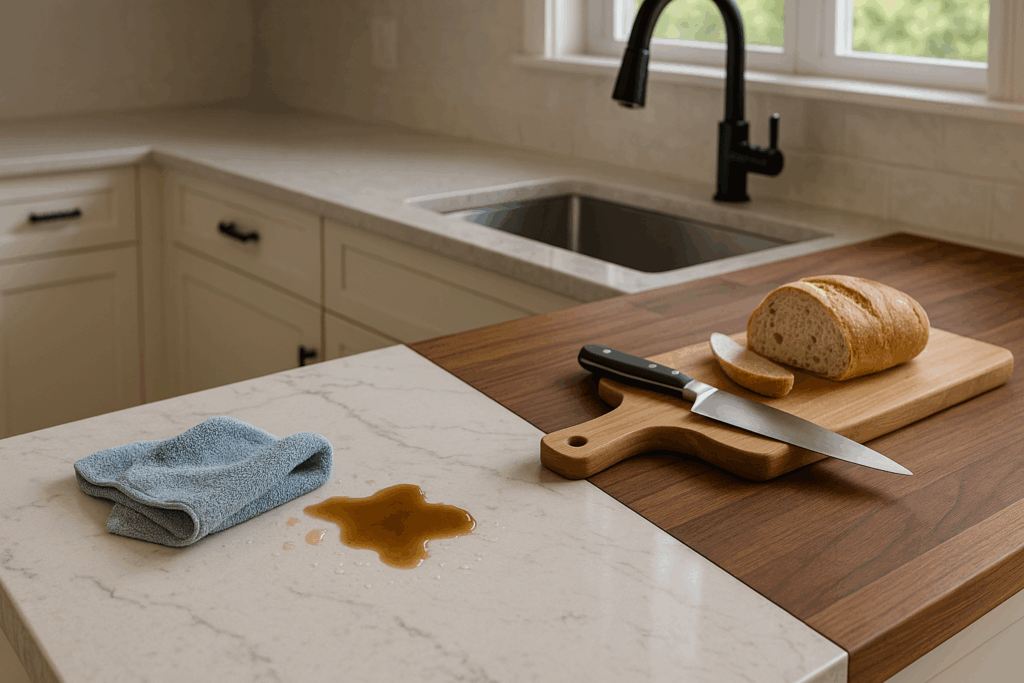
Quartz vs. Butcher Block: Countertops That Survive Busy Lancaster Kitchens
By B&M Home Improvement Solutions
Published: August 12, 2025
Updated: August 12, 2025 (Initial publication)
You want a countertop that can handle real life—weeknight dinners, coffee spills, baking days, and the occasional dropped pan—without constant babying. In Lancaster and York kitchens, the two materials homeowners ask us about most are quartz and butcher block. Both can look outstanding; both can last for years. But they behave very differently in busy households. This guide breaks down how each material performs in our local climate, what maintenance they actually require, and how to choose the right surface for the way you cook, clean, and live.
The Problem Homeowners Face
Pinterest perfection fades once counters meet daily use. The wrong surface choice can lead to water stains around the sink, cloudy rings from cleaners, or constant re‑oiling that never fits your schedule. Add Lancaster/York realities—hard water, humidity swings from winter to summer, and a mix of farmhouse, rowhome, and new‑build layouts—and it’s easy to pick something beautiful that proves high‑maintenance. You need an honest, side‑by‑side look at durability, sanitation, heat, moisture, and upkeep so your counters keep up with your household rather than slowing it down.
Overview: What Are We Comparing?
Quartz (engineered stone): Factory‑made slabs of ground natural quartz bound with resins and pigments. Nonporous, consistent color/patterns, and sealed at the factory—no routine sealing needed. Excellent stain resistance with proper care.
Butcher Block (wood): Solid wood surface—typically maple, walnut, white oak, or acacia—assembled in edge‑grain, end‑grain, or face‑grain construction. Warm, organic look with the option to sand and refinish. Requires ongoing protection (oil or film finish) and moisture management.
Performance Comparison (What Matters Day to Day)
1) Stain & Moisture Resistance
Quartz: Nonporous. Resists coffee, wine, oil, and food dyes when wiped in a reasonable time. Great around undermount sinks and dishwashers; water doesn’t soak in. Hard water spots can leave surface film but clean off with the right product.
Butcher Block: Naturally porous even when oiled. Water can darken edges near sinks and faucets if left to sit. Requires vigilant wipe‑downs and a well‑maintained finish—especially in homes with Lancaster/York’s harder water.
Winner for low‑maintenance: Quartz.
2) Heat Tolerance
Quartz: Daily use is fine, but resins can be damaged by high, sustained heat. Use trivets under hot pans, air fryers, and slow cookers.
Butcher Block: Can scorch or dry out from heat; use trivets and avoid leaving hot appliances running in one spot.
Winner: Tie—both require trivets.
3) Scratch & Impact Resistance
Quartz: Very scratch‑resistant for typical cooking; harsh scouring pads or abrasive powders can dull the finish. Edge chips are uncommon but possible if struck.
Butcher Block: Scratches and knife marks occur but can be sanded out; many homeowners consider this “patina.” Heavy impacts can dent; end‑grain blocks resist cuts best but are rarely used for full counters.
Winner for a pristine look: Quartz.
Winner for refinishability: Butcher block.
4) Sanitation & Food Prep
Quartz: Nonporous surface cleans easily with mild soap or an approved quartz cleaner. Avoid harsh solvents.
Butcher Block: Safe when sealed and maintained, but raw‑meat prep is best done on a separate cutting board. Use food‑safe mineral oil or a hardwax oil finish; keep dry between uses.
Winner for simplest sanitation: Quartz.
5) Maintenance Over Time
Quartz: Routine cleaning only. No sealing. Use manufacturer‑approved products to avoid haze.
Butcher Block: Oiled finishes need regular re‑oiling (weekly at first, then monthly or as needed). Film finishes (varnish, 2K polyurethane) reduce frequent maintenance but require full refinish if damaged.
Winner for ease: Quartz.
6) Design Flexibility & Feel
Quartz: Wide color/pattern range, from marble‑look veining to solid tones. Long spans with clean seams possible. Pairs well with modern, transitional, and farmhouse kitchens.
Butcher Block: Adds warmth that stone can’t. Works beautifully as an accent island or baking station, even if the main runs are quartz. Species and grain choice meaningfully change the look.
Winner for constant warmth and tactile feel: Butcher block.
Winner for pattern control and consistency: Quartz.
Step‑by‑Step: Choose the Right Counter for Your Kitchen
Audit your lifestyle
Do you meal‑prep and bake often? Is your sink a splash zone with kids or pets? Prefer tidy, wipe‑and‑done cleanup? If low maintenance is a must, quartz leads. If you value tactile warmth and don’t mind upkeep, butcher block can shine.Pick your zones
Many Lancaster & York clients choose hybrid layouts: quartz for perimeters and sink runs; butcher block for an island or prep table. This delivers both durability and warmth.Select thickness & edges
Quartz: 3 cm is common locally; 2 cm with built‑up edges is an option for certain profiles.
Butcher block: 1.5–2.25 inches typical; square eased edge or small chamfer looks clean and reduces finish wear.
Plan seams and support
Long quartz runs minimize seams; we’ll design overhangs and hidden steel where needed. For butcher block, allow for seasonal movement—mechanically fasten with slots and leave expansion gaps near walls and appliances.Choose the sink wisely
Quartz: Undermount stainless or composite sinks pair well. For farmhouse sinks, we add proper support and moisture protection at the apron.
Butcher Block: Undermount is possible but higher‑risk near standing water. A drop‑in sink reduces edge exposure; we add waterproofing and recommend drying after use.
Match the backsplash
Quartz can continue as a short backsplash or full‑height slab. With butcher block, tile or solid‑surface backsplash protects the wall at the sink area.Confirm care plan
Quartz: Mild dish soap or quartz cleaner; microfiber cloth; no abrasive powders.
Butcher Block: Food‑safe mineral oil or hardwax oil; schedule re‑oiling; keep a fine sanding pad on hand for quick refreshes.
Lancaster/York Pro Tips
Hard water realities: Use a squeegee or towel around sinks. For quartz, a non‑abrasive scale remover designed for engineered stone clears haze. For butcher block, dry edges promptly and refresh oil more frequently near the sink.
Older walls = scribing: Many city rowhomes and farmhouses have out‑of‑square walls. Precision templating and scribing keep seams tight and backsplashes flush.
Dishwasher heat & steam: We install moisture barriers and proper venting so steam doesn’t affect counters—especially important for butcher block.
Permits & coordination: Countertop swaps can trigger plumbing or electrical adjustments (disposal switch, GFCI spacing, outlet heights). Our design‑build process coordinates these details so install day runs smoothly.
Local sourcing: We work with Lancaster‑area suppliers (Hajoca for sinks/faucets, Red Rose Cabinetry, Lezzer Lumber, Too the Trades) to keep selections consistent and lead times reliable.
Style Playbook: Pairings That Work
Modern Farmhouse: Warm walnut butcher block island + soft white quartz perimeters with subtle veining; matte black hardware.
Transitional: Light gray quartz with a satin finish + white shaker cabinets; optional maple butcher block baking zone.
Contemporary: Solid, low‑movement quartz in a neutral tone + flat‑panel cabinets; integrated LED under‑cabinet lighting.
Common Mistakes to Avoid
Choosing glossy butcher block near a busy sink—film finishes look great but are hard to spot‑repair.
Using harsh abrasives on quartz that cause dull patches or micro‑scratches.
Skipping expansion allowance on wood tops, leading to cracks at fasteners or backsplash.
Undersizing supports for extended overhangs at islands.
Forgetting edge protection around a farmhouse sink apron; water exposure adds up.
When to Call a Pro (and Why B&M)
Countertops touch plumbing, electrical, cabinets, and sometimes flooring. A professional templating and install team ensures tight seams, correct support, clean cutouts, and moisture management. As a design‑build remodeler, B&M coordinates counters with your cabinets, backsplash, lighting, and ventilation—so your upgrade looks intentional and performs for years.
FAQs
Can I cut directly on my countertop?
Use a cutting board on both materials. Quartz will dull knives and can scratch; butcher block will show cut marks (refinishable, but unnecessary wear in busy kitchens).
Will quartz discolor in sunlight?
Prolonged UV exposure can affect some colors. In bright south‑facing kitchens, we recommend UV‑stable selections and appropriate window treatments.
Which butcher block species holds up best?
Maple is dense and light; walnut is softer but hides marks beautifully; white oak resists moisture better than many species when finished correctly.
Is a waterfall end practical?
Yes for quartz—durable and visually striking. We avoid waterfall ends in butcher block unless the design specifically embraces movement and seasonal gaps.
What about resale value?
Quartz remains the safe, broadly appealing choice in Lancaster/York. Butcher block adds character, especially as an island accent.
Call to Action
Ready to choose counters that actually match your lifestyle? Whether you want the wipe‑clean convenience of quartz, the warmth of butcher block, or a hybrid layout, our team can template, source, and install with minimal downtime.
Request a consultation:
Phone: 717‑449‑8789
Email: BMHomeImprovementSolutions@gmail.com
Written for homeowners in Lancaster & York, PA, by B&M Home Improvement Solutions—your local kitchen and bathroom remodeling specialists.