

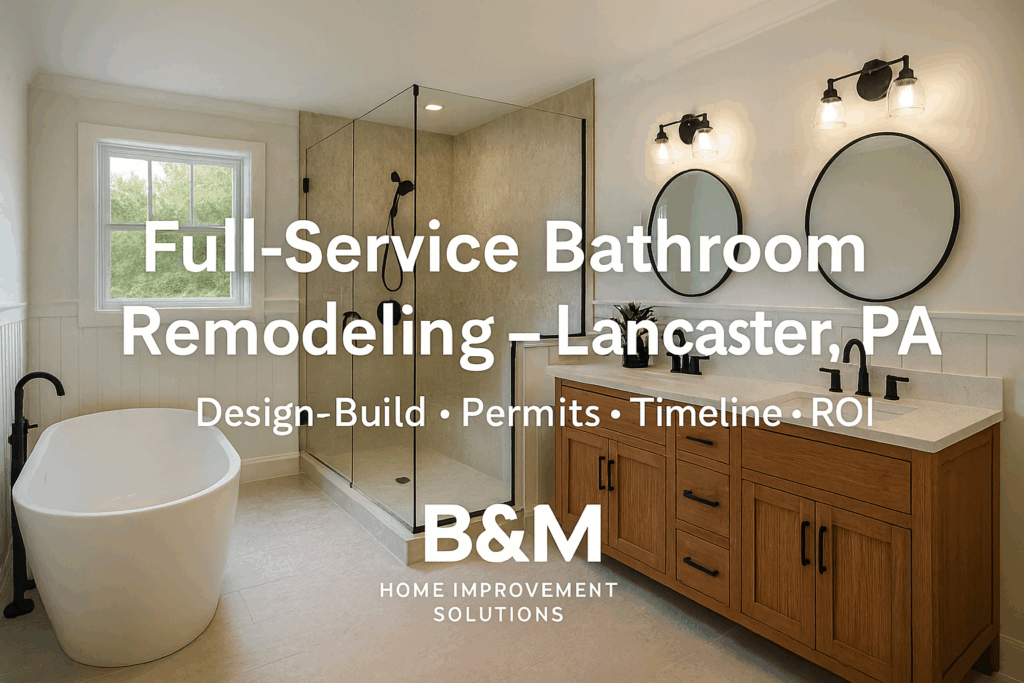
Full-Service Bathroom Remodeling in Lancaster, PA: The Ultimate Guide to Costs, ROI & FAQs
Full Video Overview at End of Article.
Planning a bathroom remodel in Lancaster, Pennsylvania can be one of the most rewarding home improvements. A modernized bathroom not only enhances your daily comfort and lifestyle but also adds value to your home. In fact, bathrooms and kitchens are among the most popular remodeling projects nationwide (about 25% of homeowners who remodel tackle bathrooms). This comprehensive guide will walk you through the benefits of a full-service bathroom remodel, what to expect during the process, cost and ROI considerations, and answers to frequently asked questions. Whether you’re in Lancaster City or the suburbs of Lancaster County, being informed will help you get the most out of your bathroom renovation project.
Planning a bathroom remodel in Lancaster? Start with our Bathroom Remodeling – Lancaster PA guide for scope, timelines, and design-build steps.
If your project is shower-focused, see our Shower Replacement – Lancaster PA (step-by-step).
Why Remodel Your Bathroom in Lancaster, PA?
A bathroom remodel is more than a cosmetic upgrade – it’s an investment in your home’s value, safety, and your quality of life. Updated bathrooms can make daily routines more enjoyable and efficient, and they often increase your property’s appeal to future buyers. According to industry data, homeowners typically recoup around 50%–70% of their bathroom remodeling costs when they sell their home. In the Mid-Atlantic region, a midrange bathroom remodel averages about a 58.9% return on investment (ROI), meaning if you spend roughly $27,000 on the remodel, about $16,000 is added to your home’s resale value. While a bathroom renovation might only boost the home’s resale value by around 3% on average, the real payoff comes in daily comfort and enjoyment – in fact, 93% of homeowners report a better quality of life after remodeling.
Beyond financial returns, remodeling can address safety and functionality issues. Many older Lancaster-area homes have outdated bathrooms with poor ventilation, leaky fixtures, or even hazards like slippery floors. A remodel lets you add features like better lighting, slip-resistant flooring, or a walk-in shower that improves safety for your family. Likewise, if you’re planning to age in place, updating the bathroom with an accessible design (curbless showers, grab bars, wider doorways, etc.) can make your home more livable for years to come. And of course, a fresh, modern bathroom simply looks and feels better – from new tile and fixtures to added storage, the aesthetic upgrade can turn a dull bathroom into a spa-like retreat.
Local market tip: In Lancaster’s competitive real estate market, renovated bathrooms can help your home stand out. Buyers consistently prioritize updated kitchens and bathrooms, so a remodel can make your home more attractive when it comes time to sell. Even if you’re not selling soon, you’ll enjoy the benefits every day in the meantime.
Planning Your Lancaster Bathroom Remodel
Proper planning is the foundation of a successful bathroom renovation. Start by assessing your needs and goals for the space. Ask yourself questions like: What do I dislike about my current bathroom? What are my must-haves in a new bathroom – more storage, a double vanity, a larger shower, better lighting? Make a wish list of features and establish your non-negotiables (for example, a walk-in shower for easy accessibility, or a soaking tub for relaxation).
Before you lock a scope, review local price drivers in the Lancaster Bathroom Remodeling Cost Guide and use our design-build checklist to avoid rework.
Next, set a realistic budget based on your goals. Researching local cost estimates can help (we’ll cover cost details in the next section). As you budget, factor in a contingency for unexpected issues – experts recommend a ~20–30% cushion just in case you encounter surprises like hidden water damage or code upgrades during construction. It’s better to plan a bit extra than to come up short mid-project.
At this stage, it’s also wise to gather inspiration and ideas for your new bathroom’s design. Browse home improvement magazines, Pinterest, and Houzz for styles and layouts you love. Pay attention to what materials (tiles, fixtures, colors) appeal to you and what would fit the character of your Lancaster home. For example, if you live in one of Lancaster’s historic homes, you might opt for a classic design with vintage touches; in a newer suburban home, a sleek modern or farmhouse style might be perfect. Bringing your ideas to a professional designer or contractor will help them understand your vision.
Don’t forget about logistics and permitting in the planning phase. In most cases, a bathroom remodel that involves moving plumbing, updating electrical, or structural changes will require a building permit in Pennsylvania. A reputable Lancaster contractor can advise you on permitting requirements and even handle the paperwork for you. Also consider practical matters: Will you need to use another bathroom during the renovation? How will the work affect your daily routine? Good planning means thinking through these details upfront.
Finally, consult with a full-service bathroom remodeling contractor early in the process. Many Lancaster-area contractors offer design/build services, meaning they help with the design, material selection, and then carry out the construction. An initial consultation can give you a clearer picture of what’s feasible in your space and what the remodel might cost. Full-service professionals can also provide a remodeling checklist to ensure you’ve considered layout changes, plumbing updates, ventilation needs, and more. By planning thoroughly, you’ll set the stage for a smoother, on-schedule project with fewer surprises.
The Full-Service Bathroom Remodeling Process
Choosing a full-service bathroom remodel means your contractor handles the project from start to finish, including design, permits, material sourcing, and construction. This one-stop approach can greatly simplify a remodel for homeowners. Here’s an overview of what to expect from a full-service remodeling process in Lancaster:
Design and Consultation: The process typically begins with a design phase. You’ll work with a designer or your contractor to create a layout and choose materials that meet your needs and style. A full-service contractor will take detailed measurements of your bathroom and help you select fixtures, tiles, vanities, and other finishes that fit both your vision and budget. At this stage, you’ll finalize the scope of work and get a detailed proposal or quote.
Permitting and Prep: Once designs are approved, your contractor will obtain the necessary building permits from the local authorities (for Lancaster City or your township in Lancaster County). Pennsylvania’s building codes generally require permits for anything beyond minor cosmetic work, especially if plumbing or electrical is being modified. A full-service firm will handle these approvals and schedule any required inspections. They’ll also help you prepare for demolition – for example, advising how to clear out personal items and set up a temporary bathroom solution if needed.
Demolition and Structural Work: The actual construction kicks off with demolition of the old bathroom. Full-service remodelers will arrange for proper disposal of old fixtures, tiles, and debris, keeping your home as clean as possible. If your project involves layout changes (such as moving a shower or removing a wall), carpenters will perform the necessary framing or structural adjustments. Older Lancaster homes may have unique challenges at this stage – it’s common to find out-of-plumb walls or old plumbing that needs replacement. A seasoned Lancaster contractor will know how to handle issues like uneven floors or outdated wiring that are often present in historic houses.
Plumbing, Electrical & HVAC: Next, licensed plumbers and electricians will rough-in the new water lines, drain lines, wiring, ventilation fans, and lighting according to the design. For instance, if you’re relocating the toilet or adding an exhaust fan, this work happens early in the construction phase. All plumbing and electrical work will be done to code (and inspected as required by the permit). Upgrading old pipes or wiring during a remodel is common and ensures your new bathroom operates safely and reliably for decades to come.
Installing Fixtures and Surfaces: Once the “behind the walls” work is done, the focus shifts to making your new bathroom come together. This includes installing the bathtub or shower, toilet, and sink/vanity. Walls are closed up and prepped, then new tilework is installed in the shower or on the floor as planned. You’ll see backer boards, waterproofing membranes, and then the finished tile or stone going in. After tiling, painters will handle any wall and trim painting or wallpaper. Cabinets or vanities are set in place, and countertops (such as quartz or marble) are fitted. Finally, fixtures like faucets, shower heads, light fixtures, mirrors, and accessories (towel bars, etc.) are installed.
Finishing Touches and Cleanup: In the last stage, the contractor will focus on the finishing details. They’ll add any final trim, caulk and seal all joints (especially around tubs and showers to prevent water leaks), and make sure everything is functioning properly. A quality full-service contractor will also do a thorough cleanup – your new bathroom will be cleaned, dusted, and all construction debris removed. You’ll do a final walkthrough to inspect the work and ensure every detail meets your expectations. Reputable contractors also provide any warranty information and instructions for product care at this point.
Figure: A beautifully remodeled bathroom in Lancaster, PA, featuring a freestanding soaking tub, custom tile flooring, and a modern double-sink vanity. Full-service remodels handle every detail, from design through final finishing, to create stunning results like this.
One advantage of the full-service approach is efficient project management. All the scheduling and coordination (from the plumber to the electrician to the tile installer) is handled by the contractor’s team. This keeps the project on a tighter timeline than a DIY approach or using separate subcontractors. Typically, a complete bathroom remodel takes about 4–8 weeks of construction time once demolition begins, depending on complexity. Design and product ordering might add a few weeks beforehand. Your contractor should give you a clear timeline and keep you updated on progress. While no remodel is entirely stress-free, having professionals manage the process minimizes disruptions – so you can focus on anticipating your new bathroom rather than worrying about the next step.
How Much Does a Bathroom Remodel Cost in Lancaster?
See typical ranges and what moves estimates up or down in the Lancaster bathroom cost guide. If you’re weighing a shower-only scope, compare Lancaster shower replacement costs and fast-install pricing in the 2–3 Day Shower Cost (2025) breakdown.
One of the first questions Lancaster homeowners ask is “What will my bathroom remodel cost?” Bathroom renovation costs can vary widely depending on the size of your bathroom, the scope of work, and the quality of materials and finishes you choose. In Lancaster, average full bathroom remodels typically range from around $20,000 on the low end to $80,000 or more for upscale projects. Most mid-range bathroom renovations (the level many homeowners choose) fall somewhere in the $20K–$40K range for a complete remodel of a standard-size bathroom. High-end luxury bathroom makeovers with custom cabinetry, high-grade stone, and premium fixtures can exceed $100,000 for a spacious master bath. On the other hand, smaller bathroom “facelifts” or partial updates (like replacing a vanity and toilet, or updating fixtures and repainting without major layout changes) could cost between $5,000 and $15,000, depending on what you do. It’s a broad spectrum, which is why getting a tailored quote for your specific project is so important.
Several key factors influence the cost of a bathroom remodel:
Bathroom Size: It might sound obvious, but the size of your bathroom plays a big role in cost. Renovating a small powder room or half-bath will generally cost far less than a large master bathroom. A larger room means more flooring, more tiles, more paint, and often more fixtures to purchase and install. For example, luxury master bathrooms in Lancaster can easily run $30,000 and up, whereas a small hall bathroom might be much less.
Scope of Work: The extent of the renovation is a major cost driver. Are you doing a cosmetic refresh (updating surfaces and fixtures) or a down-to-studs remodel? Projects that change the layout or require moving plumbing lines (like relocating a shower or toilet) will cost more due to additional plumbing and possibly structural work. Adding new features (for instance, installing a new window for light or expanding the bathroom’s footprint) also raises costs. In contrast, keeping the existing layout and simply replacing old fixtures with new ones is more budget-friendly.
Materials and Fixtures: The choices you make on finishes have a significant impact on cost. There’s a big range in pricing between basic and high-end options. For instance, ceramic tile is generally cheaper than natural stone tile; a standard prefabricated shower surround costs far less than a custom tiled shower. Stock or ready-made vanities from a home improvement store will be more affordable than custom cabinetry. Likewise, fixtures (faucets, shower systems, lighting) come in a wide price range. Upgraded materials like frameless glass shower enclosures, granite or quartz countertops, and luxury faucets will increase the budget. That said, investing in quality fixtures can pay off in durability and satisfaction. You’ll need to balance cost with the look and longevity you want.
Age/Condition of the Home: Houses in Lancaster range from historic city homes built in the 1800s to modern suburban developments. Older homes can present hidden challenges that add cost. For example, you might discover old plumbing that needs to be replaced, uneven floor joists that require reinforcement for new tile, or even hazardous materials (like asbestos in old flooring or lead paint) that require professional remediation. These issues aren’t always evident until the project is underway. Newer homes typically have fewer surprise issues behind the walls, which can make their remodels a bit more straightforward.
Labor and Hidden Costs: Don’t forget the less-visible but necessary costs. Your contractor’s labor and project management are a chunk of the budget, as are any design fees if you work with a professional designer or architect. Building permits and inspections come with fees (which vary by municipality in Lancaster County). There may be costs for waste disposal, delivery of materials, or setting up a temporary bathroom solution. Reputable contractors will include these in their estimates, but it’s good to be aware of them.
Geographic Location & Logistics: Within Lancaster County, your location can subtly affect cost. Remodeling a home in downtown Lancaster City or another historic district can cost 10–20% more than in a suburban area, due to challenges like tight work spaces, older infrastructure, or special permitting conditions. Neighborhoods like Lititz (with its mix of historic and new homes) might see slightly higher costs especially in the old downtown, whereas areas like Manheim Township or Leola with newer housing stock often have more predictable remodeling conditions and potentially lower extra costs. Additionally, the local demand for contractors and material prices can fluctuate – which is why it’s smart to get a few quotes to gauge competitive rates in the Lancaster area.
With so many variables, how can you budget wisely? First, decide which aspects of your remodel are most important to you. Allocate funds to your priorities – for example, splurge on a great shower if that’s your must-have, and perhaps choose a more economical tile elsewhere. It’s often said in remodeling that “everything will cost a little more and take a little longer than you initially think.” That’s where having a contingency fund (around 15-20% of the project cost) helps cover any unexpected issues without derailing your project. Finally, work with a trusted local contractor who will provide a detailed, transparent estimate. They should break down the costs for materials, labor, and other expenses, so you understand where your budget is going.
The ROI of Bathroom Remodeling in Lancaster
If ROI matters, skim our local breakdown: Bathroom Remodel ROI – Lancaster County. For premium upgrades, see scope ideas here: Luxury Bathroom Remodel – Lancaster PA.
When considering a renovation, it’s natural to ask: Is a bathroom remodel worth it financially? As noted earlier, bathroom remodels in Lancaster typically offer a 50%–70% return on investment in terms of increased home value. That means if you spend $30,000 on a quality remodel, your home’s resale value might go up by $15,000–$21,000 as a result (market conditions and the specific project will influence the exact amount). Importantly, this percentage can vary by the type of remodel:
Midrange Bathroom Remodels (the average kind of project with good-quality but not ultra-luxury finishes) have about a 58–60% ROI in the Mid-Atlantic region. This is a “typical” hall or guest bathroom update – for example, updating a 5×7 ft bathroom with a new tub/shower with tile surround, new toilet, vanity with solid-surface countertop, fresh flooring and lighting. Such a project might cost around the mid-$20,000s and add roughly $15,000 in value on resale.
Upscale Bathroom Remodels (high-end master bathrooms with luxury finishes, custom tile work, high-quality fixtures, maybe even expansions) tend to have a lower percentage ROI – often in the 45%–50% range. For instance, a master suite remodel that costs $80,000 may add $40,000 in value. The ROI is smaller because upscale projects involve expensive materials that don’t always fully translate to higher sale price. However, these luxury baths can absolutely make your home more appealing to buyers in the high-end market and can be a deciding factor in a sale.
Bathroom Additions (adding a completely new bathroom to a home) generally yield a lower ROI as well, often between 25%–50%. Building a new bathroom (e.g., adding a master bath where one didn’t exist, or a bathroom as part of finishing a basement) is a larger investment. While it might not return dollar-for-dollar value, it does significantly improve functionality and can lift your home’s marketability – especially if you previously had too few bathrooms for the size of the house.
It’s important to note that ROI isn’t everything. Homeowners in Lancaster consistently report that a bathroom remodel is worthwhile for many reasons beyond the resale math. Remember that 3% average increase in home value from the Pennsylvania data is just part of the picture; the utility and enjoyment you get from the new space is a big part of the “return.” A new bathroom can feel like a daily luxury – think of stepping into a freshly tiled, spa-like shower each morning, or having a double vanity so you’re not bumping elbows during busy mornings. These improvements make your home life better immediately. And if you plan to stay in your home for a while, you’ll personally “get back” the investment through years of use.
That said, if maximizing ROI is a top concern (for example, if you plan to sell your home in the next few years), here are a few tips for boosting the return on a bathroom remodel:
Stick to Midrange Selections: As data shows, midrange projects tend to have the highest percentage ROI. You don’t need the most expensive Italian marble to impress buyers; good-quality, contemporary fixtures and finishes in a neutral, timeless style often appeal to the widest range of people.
Avoid Major Layout Changes: Unless necessary, try not to move plumbing fixtures too drastically. Keeping the shower, toilet, and sink in the same general locations can save thousands in plumbing work, which you likely won’t fully recoup at resale. Focus on updating the fixtures and surfaces instead – new faucets, tile, lighting, and paint can transform a space without gutting the entire room.
Focus on Functional Improvements: Fix any functional issues (like poor ventilation or a faulty fan, lack of lighting, or inadequate storage). A beautiful bathroom that doesn’t work well can turn off buyers. Features like better lighting, quiet vent fans, extra storage space, and water-efficient fixtures add real value and are selling points you can mention.
Choose Popular Features: Certain features have broad appeal – for example, a curbless walk-in shower is very attractive (both for style and for accessibility) and is a hot trend right now. Double-sink vanities in master baths are also highly desired by couples. You don’t need to include every trendy gadget, but incorporating a few on-trend yet practical features can make your bathroom stand out. (We’ll discuss popular Lancaster bathroom trends in the next section.)
Quality Workmanship: No matter the budget, the quality of installation matters. Poor workmanship can actually hurt your home value. Buyers (and home inspectors) notice sloppy tile or plumbing problems. Hiring experienced, licensed professionals and doing the project correctly ensures you actually get the value from it. A well-executed midrange remodel often trumps a poorly executed upscale one in terms of value.
In summary, a bathroom remodel in Lancaster is generally a sound investment. It may not return 100 cents on the dollar in pure home value, but the combination of partial cost recoupment, a quicker home sale (thanks to updated features), and the years of personal enjoyment and convenience make it a top home improvement choice. As one remodeling report put it, bathroom renovations rank very high in “Joy Score,” near a perfect 10 for homeowner satisfaction – and that’s a return you can’t quantify just in dollars!
Popular Bathroom Remodeling Trends & Features in Lancaster
Comparing wall systems? Read Solid Surface vs. Acrylic – Comparison and the Solid Surface Pros & Cons. Prefer tile? See Leak-Proof Tile Shower (Schluter) and common issues in Tile Shower Water Damage – Lancaster.
Design trends in bathroom remodeling evolve over time, and Lancaster homeowners are definitely embracing both modern conveniences and classic touches in their bathroom upgrades. If you’re looking for inspiration, here are some popular bathroom remodeling features and trends seen in Lancaster, PA homes:
Spa-Like Showers: Large, luxurious showers are in. Many renovations involve converting old tub-shower combos into spacious walk-in showers with frameless glass enclosures and custom tile work. One sought-after feature is the curbless shower, which means the shower floor is flush with the bathroom floor (no step or threshold). Curbless, barrier-free showers not only look sleek and high-end, but they also make the bathroom more accessible for all ages. Homeowners often add built-in bench seating and niches for toiletries in these showers, as well as indulgent fixtures like rain showerheads or hand-held sprayers. Modern showers can even include steam features for a true spa experience.
Freestanding Bathtubs: The classic soaking tub has made a comeback as a focal point in many Lancaster bathroom remodels. Instead of the old built-in jacuzzi deck tubs, people are opting for elegant freestanding tubs that make a design statement. A deep freestanding tub in a master bath offers a spa-like retreat for soaking. Popular styles range from vintage-look clawfoot tubs to sleek modern soaker tubs. If space allows, some homeowners are including both a freestanding tub and a walk-in shower to cover all the bases – a quick shower in the morning and a relaxing bath in the evening.
Dual Vanities & Improved Storage: If the bathroom is used by two people (like a master or shared family bath), a dual-sink vanity is highly desirable. Couples appreciate having their own sink and space. Even in smaller bathrooms, contractors can often reconfigure the layout or find a slightly larger vanity to increase storage and counter space. Speaking of storage, custom storage solutions are a big trend. Homeowners want clutter-free, organized bathrooms. This means adding features like medicine cabinets or mirror cabinets, built-in shelving or linen niches, and vanities with smart storage (drawers with dividers, pull-out shelves, etc.). In fact, creative storage additions like recessed wall niches or cabinetry tailored to your needs are common requests. A well-designed remodel will take advantage of every inch – for example, adding a tall linen cabinet if you have ceiling height, or installing drawer organizers for toiletries. Storage might not be the flashiest part of a bathroom remodel, but it definitely enhances daily functionality.
Figure: A newly remodeled Lancaster bathroom featuring a custom wood vanity with ample storage and a stylish barn door. Smart use of space – like built-in cabinets, shelving, and modern vanity designs – is a top trend to keep bathrooms organized and clutter-free.
Heated Floors: Lancaster winters can be chilly, which may be why radiant heated flooring in bathrooms is gaining popularity. Electric underfloor heating mats can be installed beneath tile or vinyl plank flooring, taking the edge off cold mornings. Homeowners love stepping onto a warm tile floor in winter – it’s a little luxury that also improves energy efficiency. Radiant heat is known to be an efficient way to warm a room and can even help reduce reliance on central heating in the bathroom. If you’re already replacing the flooring, it’s a feature worth considering.
Upgraded Lighting & Ventilation: A lot of older bathrooms in Lancaster have a single overhead light and an old loud fan. Modern remodels focus on bright, layered lighting – for example, recessed ceiling lights plus stylish vanity sconces or mirror lights. Good lighting makes a huge difference in how the space feels. Likewise, up-to-date ventilation fans (often with quiet or even humidity-sensing models) are being added to prevent moisture buildup and mold. Some fans now come with integrated lights or even night-light features, combining function and convenience.
Bold Use of Color and Materials: While neutral palettes (whites, grays, beiges) remain classic, many Lancaster homeowners are introducing pops of color or natural textures to add character. This might be an accent wall of colored tile, a vanity in a soft sage green or navy blue, or simply decor and paint choices that depart from all-white. Natural wood tones are making a resurgence too – for example, a vanity made of reclaimed wood or wood-look tiles that add warmth. These touches keep the design from feeling too sterile and can reflect the historic or rustic charm that’s appreciated in this region.
Eco-Friendly Fixtures: There is growing interest in green remodeling choices. This includes installing water-efficient fixtures like low-flow toilets and faucets, LED lighting, and using sustainable materials where possible. Not only do eco-friendly bathroom upgrades reduce utility bills, but they align with the values of homeowners looking to conserve resources. For instance, dual-flush toilets and modern showerheads can significantly cut water usage without sacrificing performance.
Smart Bathroom Technology: Bathrooms are getting smarter! Many remodels now incorporate tech features for convenience and luxury. Consider programmable shower systems (where you can set water temperature and flow presets), digital thermostats for heated floors, mirror defoggers, or even Bluetooth speakers integrated into light fixtures or showerheads. You can listen to music or news while you shower, or have a mirror that won’t steam up when you’re getting ready. Some high-end projects include smart toilets with bidet functions and motion-activated lighting under vanities for nighttime. While not everyone needs all the bells and whistles, integrating one or two tech features can elevate your bathroom experience and even impress future buyers with a cutting-edge touch.
In Lancaster, blending modern amenities with timeless design is the prevailing approach. Many homeowners opt for a clean, bright look – think white or light-colored tiles, quartz countertops, and chrome or brushed nickel fixtures – and then personalize it with some of the trends above. The good news is that with a full-service remodel, you can customize the space to exactly what suits your style and needs, whether it’s a rainfall shower for two, a rustic barn-style vanity, or heated floors for those cold mornings. A knowledgeable local contractor will also guide you on what designs work best for the size and type of your bathroom (for example, small bathrooms benefit from different design tricks than large ones). Keeping an eye on both current trends and classic design principles will ensure your new bathroom feels fresh and functional for years to come.
Choosing the Right Bathroom Remodel Contractor in Lancaster
Shortlisting pros? Use our Contractor Vetting Guide – Lancaster and compare scope & scheduling in Bathroom Contractors – Lancaster PA.
Selecting a reliable contractor is arguably the most important decision you’ll make for your bathroom remodel. A skilled, trustworthy contractor will turn your vision into reality with quality workmanship – while a wrong choice could lead to cost overruns or a stressful experience. Here are some tips on how to choose the right bathroom remodeling contractor in Lancaster, PA:
Experience and Reputation: Look for contractors who have a strong track record in the Lancaster area. Ideally, your contractor should have many years of experience specifically in bathroom or home remodeling, and a reputation you can verify. Check for local reviews and testimonials, and ask to see a portfolio of their recent bathroom projects. A company that has done many bathroom remodels will understand common challenges and know how to execute the work efficiently. Don’t hesitate to ask for references – and then call those past clients to ask about their experience. Consistently positive feedback is a great sign. As one local expert advises, choose a contractor with an outstanding reputation and knowledgeable staff.
Proper Licensing and Insurance: Make sure any contractor you consider is fully licensed and insured to work in Pennsylvania. In PA, home improvement contractors should be registered with the state (per the Home Improvement Consumer Protection Act). A licensed contractor will also obtain the necessary building permits for your job (confirm that they plan to handle this). Insurance is critical – they should carry general liability insurance and workers’ compensation. This protects you in case of accidents or damage during the project. A legitimate contractor will happily provide proof of insurance and licensing.
Scope of Services (Design/Build): Since you’re likely interested in a full-service (design-build) remodel, confirm that the contractor offers design assistance and manages all trades. Not all contractors provide in-house design, but many Lancaster companies do or can recommend a designer they work closely with. Full-service firms will coordinate plumbers, electricians, tilers, etc., so you don’t have to. This one-stop approach can lead to a smoother project. When interviewing contractors, ask if they handle everything from design and material selection through construction and finishing – the answer will tell you if they truly offer full-service remodeling.
Transparent Estimates and Fair Pricing: Obtain a detailed written estimate or proposal from a few contractors for your project. The estimate should break down what is included: design work, demolition, materials (or allowances if you will choose materials later), labor, permits, etc. Be cautious of any bid that is dramatically lower than others – it could be a red flag for cut corners or unexpected change orders later. At the same time, the highest price isn’t necessarily the best. Look for a fair, competitive price and an estimate that is clear and easy to understand. A good contractor will take the time to explain the costs and answer your questions. They should also outline a payment schedule (e.g. deposit, progress payments, final payment upon completion).
Timeline and Availability: Discuss the expected timeline for your remodel and when the contractor can start. Experienced contractors may be booked out for a few months, but they should still give you a realistic start date and duration. A typical bathroom remodel should take roughly 6–8 weeks once begun, so if someone promises to tear out and rebuild your bathroom in a week, be skeptical. On the other hand, also be wary if a contractor cannot give a clear timeline or keeps it too open-ended. You want commitment to a schedule (with understanding that some flexibility is needed for unforeseen issues).
Communication and Comfort: Trust your instincts during initial meetings or calls. Is the contractor responsive and communicative? Do they listen to your ideas and concerns? Good communication is vital throughout a remodel – you want someone who will keep you updated and is easy to reach when you have questions. If a contractor is hard to get ahold of or dismissive in the early stages, it may not improve later. Choose a professional who makes you feel comfortable and confident. Remember, the crew will be in your home for several weeks, so you want people you can trust and work well with.
Local Knowledge: A Lancaster-based contractor will be familiar with local building codes, permit offices, and common home styles in the area. This local expertise can be a big plus. They’ll know, for example, how to handle an old Lancaster City rowhome’s quirks versus a newer suburban development’s construction. They may also have established relationships with local suppliers or showrooms (for fixtures, tiles, etc.), which can make selecting and sourcing materials easier for you.
Contract and Warranty: Before work begins, ensure you have a signed contract that details the scope of work, payment schedule, approximate timeline, and how changes or issues will be handled. Never rely on verbal promises alone. Also ask about any warranties – many contractors offer a warranty on their workmanship for a certain period (1 year, 2 years, etc.). Manufacturers will have warranties on products (fixtures, etc.), but it’s good to know your contractor will stand behind their work if any adjustments are needed after completion.
By doing your homework and selecting the right contractor, you set your project up for success. Lancaster has several reputable bathroom remodeling companies – look for those who specialize in remodels, have professional credentials or awards, and who ultimately make you feel confident in their ability to deliver. A great contractor will not only build you a beautiful bathroom but also guide you through the process with minimal stress, keeping the project on track. As the saying goes, measure twice, cut once – a bit of careful vetting now will save you headaches later. Once you’ve made your choice, you can move forward knowing your bathroom remodel is in good hands.
Frequently Asked Questions (FAQs) about Bathroom Remodeling
Q: How much does a bathroom remodel cost in Lancaster, PA?
A: The cost can vary greatly depending on the project scope and materials, but generally a typical bathroom remodel in Lancaster ranges from around $20,000 to $30,000 for a mid-range update. Smaller scale cosmetic makeovers might be possible for under $15K, while high-end luxury renovations could run $50,000 to $100,000+ for a large master bath. For example, swapping out a vanity and fixtures will cost far less than a complete down-to-the-studs remodel with reconfigured layout. It’s best to get an in-home estimate for a more precise figure, since every project is unique. Keep in mind the factors like size, layout changes, and material choices (tile, countertops, etc.) will heavily influence the final cost.
Q: How long does a bathroom remodel usually take?
A: Most full bathroom remodels are completed in about 3 to 6 weeks of construction, assuming no major delays. Larger or more complex renovations (or those in older homes that require extra work) can extend to 8 weeks or more. This timeline covers the demolition, plumbing/electrical work, installation of fixtures and finishes, and inspections. However, planning and design can add a few weeks before construction, especially if you need to finalize material selections or wait for custom items to arrive. A reliable contractor will give you a projected schedule and will coordinate all the trades to finish as efficiently as possible. Be prepared for the main bathroom to be out of commission during this time and make alternative arrangements if needed. The good news is a well-organized crew can usually keep the timeline reasonable – many Lancaster contractors aim to wrap up a standard bathroom remodel in about a month once work begins.
Q: Do I need a permit for a bathroom remodel in Lancaster, PA?
A: In most cases, yes, you will need a building permit for a bathroom remodel, particularly if you are doing anything beyond minor cosmetic changes. Pennsylvania’s building code (the Uniform Construction Code) generally requires permits for any significant plumbing, electrical, or structural work in a home. This means if you’re moving plumbing lines, adding new electrical circuits, changing the layout, or replacing drywall, a permit and subsequent inspections are needed. If your remodel is very simple – like replacing a toilet or faucet – a permit might not be required. It’s always best to check with the City of Lancaster or your local township if you’re unsure. A professional contractor will usually handle the permitting process for you, which includes submitting plans and scheduling inspections. Getting the proper permits is important for safety and legality, and it protects you when it comes time to sell your home (unpermitted work can cause issues in real estate transactions).
Q: Will a bathroom remodel increase the value of my home?
A: Yes, updating a bathroom typically adds value to your home, though it may not return 100% of the cost as increased resale value. On average, homeowners might recoup around 50% to 70% of the remodel cost in home value increase. For instance, a mid-range bathroom remodel could boost your home’s sale price enough to get back more than half of what you spent. Industry reports specific to our region show about a 58-60% return on investment for a typical bathroom renovation. Beyond the dollars, a new bathroom can make your home more attractive to buyers, potentially helping it sell faster or for a better price compared to homes with outdated baths. It’s also worth noting that anecdotally, a bathroom remodel can increase your home’s appraised value by roughly 3% in Pennsylvania markets. While that percentage might sound modest, it can be significant on a high-value property. Plus, you’ll personally enjoy the updated space in the meantime, which is a value on its own. If you’re remodeling purely for resale, focus on popular, neutral designs and functional improvements that have broad appeal. But if you plan to stay long-term, prioritize what will improve your daily life – the value will be there both in usage and when you eventually sell.
Q: Should I hire a professional or attempt a DIY bathroom remodel?
A: For most bathroom remodels, especially anything beyond minor cosmetic updates, it’s highly recommended to hire a professional. Bathrooms involve complex trades – plumbing, electrical, waterproofing, ventilation – that need to be done correctly to avoid problems. While a handy homeowner might tackle painting or swapping a fixture, a full remodel is a big undertaking to DIY. Mistakes can be costly; for example, an improperly waterproofed shower can lead to leaks and mold. Professional remodelers ensure that everything is up to code and done to a high standard, and they can obtain the necessary permits. As one local remodeling firm notes, using professionals means your project will be built to last and you won’t face headaches from DIY errors. That said, you can still be involved in the process by doing some research, providing input on design, or even handling light tasks like painting walls or installing accessories if you have skills – but leave the critical work to licensed contractors. The investment in professional labor often pays for itself in peace of mind and longevity of the remodel. In short, DIY for a bathroom is only feasible for very skilled homeowners and very simple jobs; for a complete remodel, bring in the pros.
Q: How can I save money on my bathroom remodel?
A: Remodeling can be expensive, but there are smart ways to keep costs under control. Here are a few tips:
Keep the same layout: If you can avoid moving the toilet, shower, or tub, you’ll save a lot on plumbing rework and possibly on flooring repairs. Working within the existing footprint is one of the biggest money-savers.
Shop for cost-effective materials: You don’t have to choose the most high-end products. There are many quality mid-range tiles, fixtures, and finishes that offer a great look without the luxury price tag. For example, porcelain tile can mimic the look of marble without the cost, and factory-made vanity cabinets are cheaper than custom but still high quality.
Prioritize upgrades: Spend on the features that matter most to you and consider more budget-friendly options for the rest. If a fantastic shower is your dream, allocate funds there but maybe choose a standard vanity or keep your current lighting if it’s not bad. Splurge in one area, save in another.
Do some finishing touches yourself: If you’re handy, you could handle tasks like painting the walls, installing towel bars, or other small finishing items to save on labor. Even installing your own mirror or light fixture (if the wiring is already in place) could shave a bit off the cost. Just be sure not to DIY anything critical that you’re not qualified for.
Avoid last-minute changes: Plan thoroughly from the start. Changes or scope additions during the project can lead to additional costs (the dreaded “change orders”). The more decisions you finalize before work begins – from tile patterns to faucet models – the better you can stick to a budget.
Consider a bathroom “refresh”: If a full remodel isn’t in the budget, consider refreshing the space with cosmetic changes. For example, refinishing the bathtub instead of replacing it, painting vanity cabinets, and updating hardware can give a new look for less. You won’t get the same impact as a full remodel that addresses underlying issues, but it can be a cost-effective stopgap until you’re ready for a bigger project.
Throughout the process, remember the old saying: “Don’t sacrifice quality for a lower price.” Using very cheap materials or unlicensed labor might save money now but can cost you more down the road in repairs. The goal is to find balance – get the best value for your money. A good contractor can also suggest where it’s okay to economize and where spending a bit more is worth it. By planning wisely and being selective, you can achieve a beautiful result without breaking the bank.
Q: How do I choose the right bathroom remodeling contractor?
A: Choosing a contractor can feel daunting, but focusing on a few key points will help you find a great match:
Experience and References: Look for contractors with a solid history of bathroom projects in Lancaster. Ask friends or neighbors for recommendations and read online reviews. A contractor who has happy customers and can show you photos of their work is a good sign. Don’t hesitate to request references and actually call them to ask about their experience.
License and Insurance: Verify that the contractor is properly registered/licensed in PA and carries liability and workers’ comp insurance. This protects you and shows the contractor is professional. Most reputable contractors will mention their PA contractor registration number and have no problem providing insurance certificates.
Transparent Estimates: Get written estimates from a couple of companies. The estimate should be detailed – listing what work will be done and the materials or allowances. Be cautious of any bid that is much lower than others (could signal lower quality or hidden charges). Look for a fair price and trust your gut on who was most honest and thorough when discussing the project.
Communication: Choose someone who communicates well and promptly. If they are responsive in the bidding stage, that’s a good indicator. You want a contractor who will listen to your ideas, answer questions clearly, and make you feel comfortable. During a remodel, issues can come up; knowing you have a contractor who will inform you and discuss options is invaluable.
Full-Service Capability: Since a bathroom involves multiple trades, many homeowners prefer a design-build firm or general contractor that can handle everything. Ask if they will take care of design plans, material procurement, permits, and coordinating plumbers/electricians, etc. A one-stop contractor can simplify the process for you.
Timeline and Contract: Discuss the projected timeline and ensure the contractor can accommodate your schedule (while a good contractor might not start immediately due to prior bookings, they should give a reasonable start date). When you decide to hire, make sure to sign a detailed contract. This contract should outline the scope, timeline, payment schedule, and how changes are handled. A written agreement protects both you and the contractor.
By considering these factors, you’ll be equipped to select a contractor who is qualified and a good fit for your bathroom remodel. Remember, the goal is to find a partner for your project – someone who understands your vision and will work with you to achieve it with quality workmanship. With the right team in place, you’ll be well on your way to enjoying your dream bathroom in your Lancaster home!
Bringing It All Together: A bathroom remodel is a significant project, but with careful planning and the help of a trusted Lancaster bathroom remodeling contractor, it can transform one of the most important rooms in your home. We’ve covered the essentials – from figuring out your design and budget, to understanding costs and ROI, to adding the features that will make your bathroom special. Lancaster, PA homeowners have the advantage of many experienced full-service remodelers in the area and a wealth of design inspiration from both modern trends and our region’s classic style. Whether you’re aiming for a simple refresh or a top-to-bottom luxury makeover, the key is to stay informed and work with professionals who prioritize quality and customer satisfaction. Here’s to creating a beautiful new bathroom that you’ll enjoy for years to come!